community and resources
Discover ways to connect with the community, helpful tips for navigating care, and educational resources.

Discover ways to connect with the community, helpful tips for navigating care, and educational resources.
These very practical things of navigating the world can make a huge difference in his life.
Caregiver to a child with hypochondroplasia
Advocacy groups and networks can offer connection, shared experiences, and helpful resources that can help you navigate your child’s care with confidence.
BioMarin is not responsible for the content and conduct of these organizations.
Little People of America (LPA) has been a source of connection, support, advocacy, and information for people and families living with various kinds of dwarfism. It has been instrumental in elevating and celebrating little people everywhere, and advocating for disability rights and inclusion.
The Chandler Project was created to provide a safe space for those affected by achondroplasia and other skeletal dysplasias. It’s a place to connect with families like yours to learn more about current and ongoing research for managing achondroplasia and other skeletal dysplasias.

The Little Legs Big Heart Foundation is on a mission to empower and uplift individuals living with skeletal dysplasia and their families, redefining inclusivity and acceptance for the skeletal dysplasia community and encouraging them to resiliently live life beyond height.

Self care is essential
Research shows that self care helps lower stress, helping you stay healthy and be a better caregiver. When we hear the term “self care,” we often think of spa days or meditation retreats, but at its core, it’s really as simple as taking any action that helps you manage your emotional, physical, and mental health. Start small, treat yourself from time to time, and don’t be afraid to lean on family, friends, healthcare professionals, or support groups when you need help.
Find helpful tools and educational materials for a more in-depth perspective of hypochondroplasia.

A qualitative exploration of children’s and caregivers’ experiences, challenges, and unmet needs associated with hypochondroplasia.
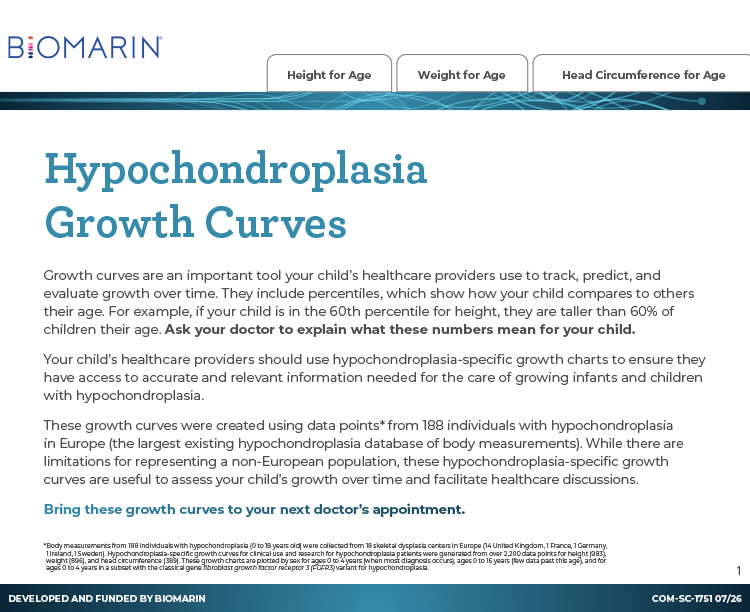
An important tool to help track, predict, and evaluate growth specifically for children with hypochondroplasia.

A collection of insights and experiences of families living with hypochondroplasia.

Sign up to learn about future local gatherings, expert-led presentations, and other events bringing the hypochondroplasia community together.
References